Why we love to spend our holidays in Norfolk
3 minute read:
‘No one ever regretted waking up in Norfolk’ was always our saying. After a long and busy week at work we used to travel to Norfolk late at night. Andrea was working in her native Glasgow and some weeks I would pick her up at Stansted airport on my three hour drive up from London.
We’ve spent many Friday evenings over the last 20 years arriving in Norfolk. There’s one thing that always thrills us, as we stumble out of the car after the journey through the darkness. It’s the first unforgettable exhilarating lungful of fresh sea air bursting with ozone. The air is really, really fresh here!
Norfolk is a wonderful county to see the night sky
The second emotion is one of wonderment as we look up into the blackness to see thousands upon thousands of bright stars, something you really never see properly in the city. Here the galaxy is magnified by the often-clear skies in starry Norfolk, the lack of light pollution and the merciful absence of tall buildings.
The night sky appears to go on for layer after layer, with more and more bright pinpricks growing smaller and smaller with increasing distance. The scale of the Milky Way is truly unimaginable. We were once lucky enough to go stargazing at an observatory in the wilderness of Chile. That was mind blowing, but the night sky in Norfolk has a similar feeling of awe and better still it’s right on our doorstep. If you have a pair of binoculars don’t forget to bring them on your holiday in North Norfolk. They really are the best way to fully appreciate the depth of the night sky here.
Beach walks in Norfolk are great all year round
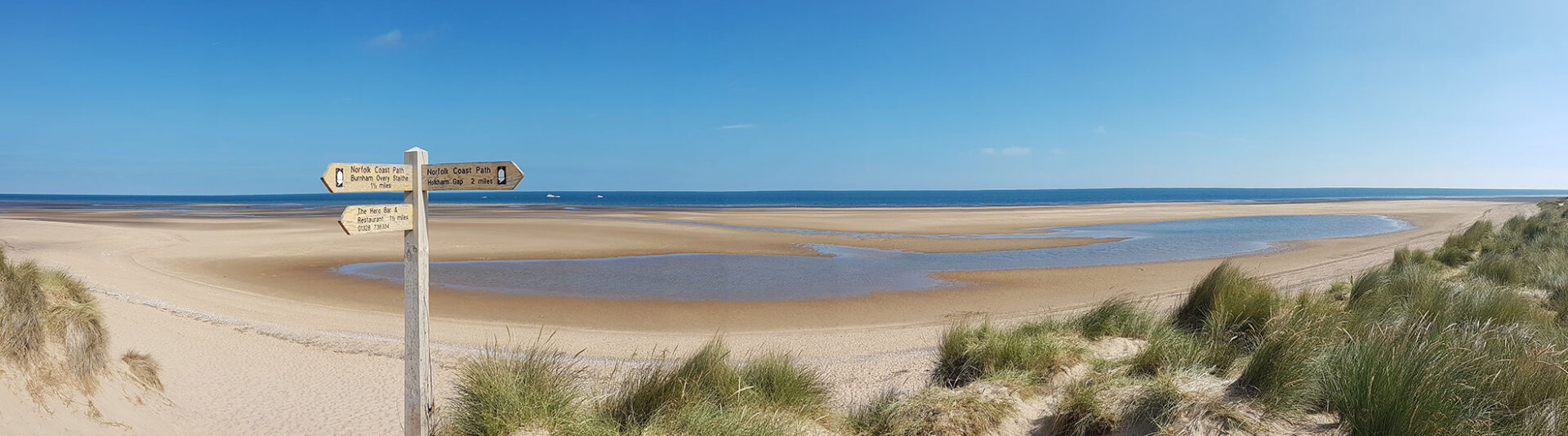
Waking up in Norfolk always promises a beach walk, whatever the season. Wrapping up in coat, scarf, hat, gloves and boots is just as exciting as wandering down to the beach in flip flops and shorts.
The beaches on the Norfolk coastline change throughout the year. One week all you can see is soft yellow sand and then suddenly another week shingle arrives, and promptly vanishes again. The sea really does its own thing.
Walking along the shore at low tide is always easiest because the sand is wet and firm. It’s common to catch sight of a seal swimming along parallel to the beach, bobbing up to take a look around, then ducking back underwater. A few minutes later they appear again away in the distance.
Another frequent sight are the cormorants. They perch on the wooden groynes and spread their huge wings wide to dry them after fishing forays.

Look out for mammoth tooth fossils when you walk the Deep History Coast
When we walk along the beach we keep a look out for fossils to collect. You can see our display at North Cottage Cromer. In the 1990s at West Runton, a short walk along the beach, a fossilised mammoth skeleton was found buried in the cliffs.
More recently some of the oldest footprints in Europe were found preserved in the mud near Happisburgh in 2014. The footprints were revealed to have been made 900,000 years ago. Because of these important finds the 36 kilometre section of coastline from Weybourne to Happisburgh (pronounced Haysburgh) has been named the Deep History Coast. We haven’t found a mammoth bone yet, but we have found what we believe is a fossilised mammoth tooth.
Take extra care when walking along or near the cliffs in Norfolk
It’s easy to walk along the coastline, either along the cliff paths, or the beach itself. But do be wary of straying too close to the cliff edge as they can be unstable, especially after periods of rain. There have been some dramatic cliff collapses in recent years. For the same reason it’s wise not to walk too close to the cliff when on the beach.
North Norfolk is home to some amazing bird life
We also love to go to the saltmarsh in Cley to see the birdlife. If you’re really lucky you might also catch a glimpse of an otter swimming through the many waterways. At dusk you can also see hundreds of starlings – called a murmuration – swooping over the water reeds around the church and village.
Listen out for owls too as they head out for supper. It really is a truly magical place. You can walk out along the pathway through the reserve to the shingle beach. It can sometimes be misty here and is very atmospheric. We take a flask of tea or soup in winter to sit and enjoy being so close to the wilderness.
The North Norfolk coast is dotted with charming seaside villages to visit
After getting away from it all Norfolk also has lots of charming towns and villages to visit. Many of them are wonderfully unspoilt and still boast independent shops and cafes, they offer a refreshing change to the high streets of our cities. Wells-next-the-Sea, Blakeney, Holt, Sheringham and Cromer all have their own individual charm.
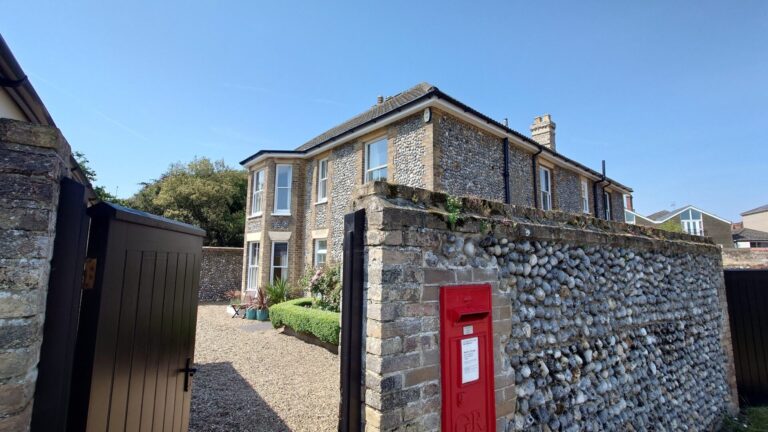
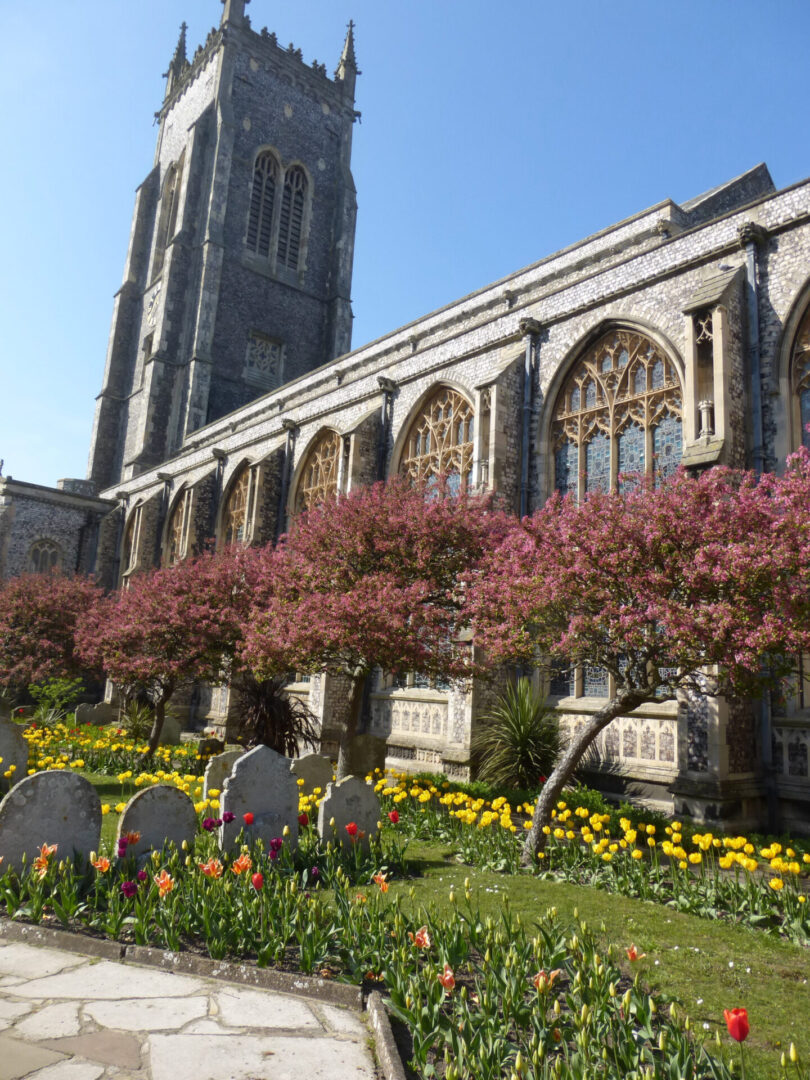
You’ll also be amazed how many churches there are as you travel around. With over 650 churches it’s said Norfolk has the greatest concentration of them in the world, many of them from mediaeval times, built in the eleventh century. We especially love to see the flint knapped churches, where the flints have been fractured to create flat faced walls. Sometimes the flints are even cubed and make chequerboard patterns. The church of St Peter and St Paul in Cromer is partly flint knapped and Grade 1 listed.
We also love to visit gardens in Norfolk. It’s home to one of our absolute favourites in the world. The Old Vicarage Garden at East Ruston has been created entirely from open fields since 1973. It’s been lovingly and cleverly designed and has some really fun touches. A boundary of trees and hedges stretches down to the coast and has a cheeky carved out ‘window’. Through this you can see a spectacular glimpse of the colourful red and white striped lighthouse at Happisburgh. This pleasing sight always brings a smile. These are just some of the reasons we ‘never regret waking up in Norfolk’. We hope you’ll treasure your days exploring North Norfolk just as highly as we do.