Why we love houseplants at North Cottage Cromer
3 minute read:
We love gardening and whenever we travel we enjoy visiting not only gardens, but also garden centres and nurseries. When it’s allowed, or practical, we even bring plants and seeds home with us and these act as a wonderful reminder of our holidays as they flourish and grow.
At home we have an allotment and a tropical themed garden, but one thing we always wanted was a conservatory. Sadly, we didn’t have space for a decent size one in our small north-facing garden. So we were thrilled, when we first viewed North Cottage Cromer, to discover the large conservatory. This was definitely one of the things we fell instantly in love with.

According to planning consent documents found online the conservatory at North Cottage Cromer was added to the house in 1993. That means it’s coming up to its 30th anniversary. Fortunately it was expertly built in hardwood timber and wraps elegantly around the flint-faced corner of the house that reaches into the garden.
A part of the flint-faced walls of the original house are now enclosed under the glass roof and form two sides of the elongated octagonal building. The flints are beautiful to look at – the stones would have been collected from the beach – and they create a natural backdrop to help bring the outside in. The floor is paved in natural slate – perfect for standing large planters on and the windows have a wide sill all around offering a great home for plants of all kinds.
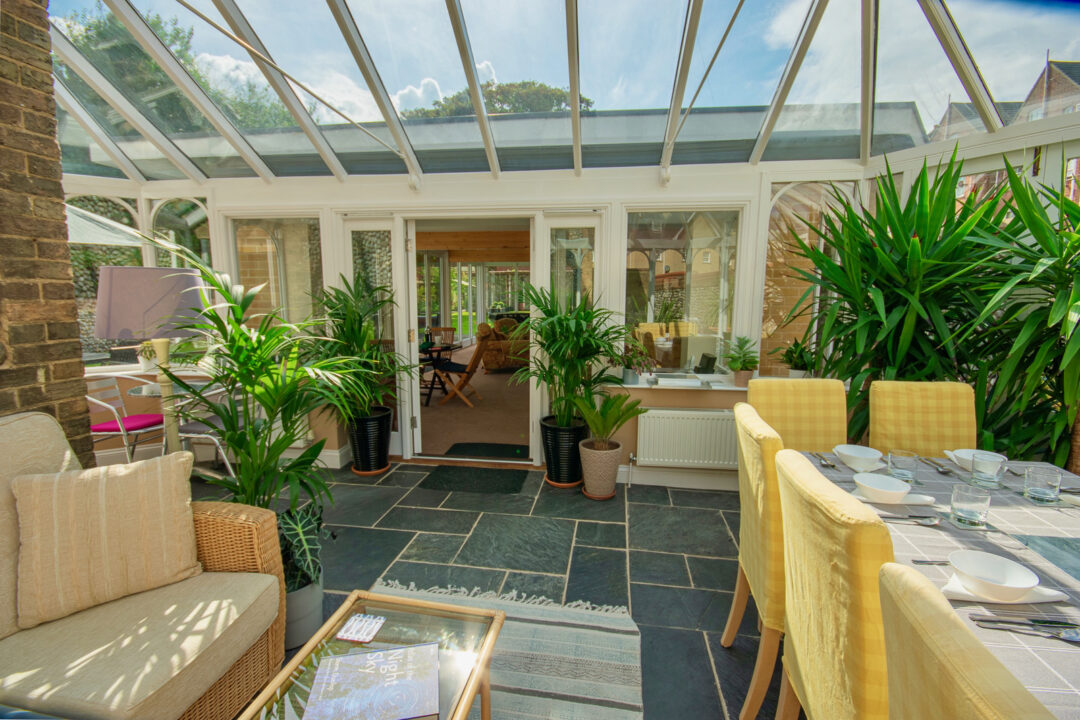
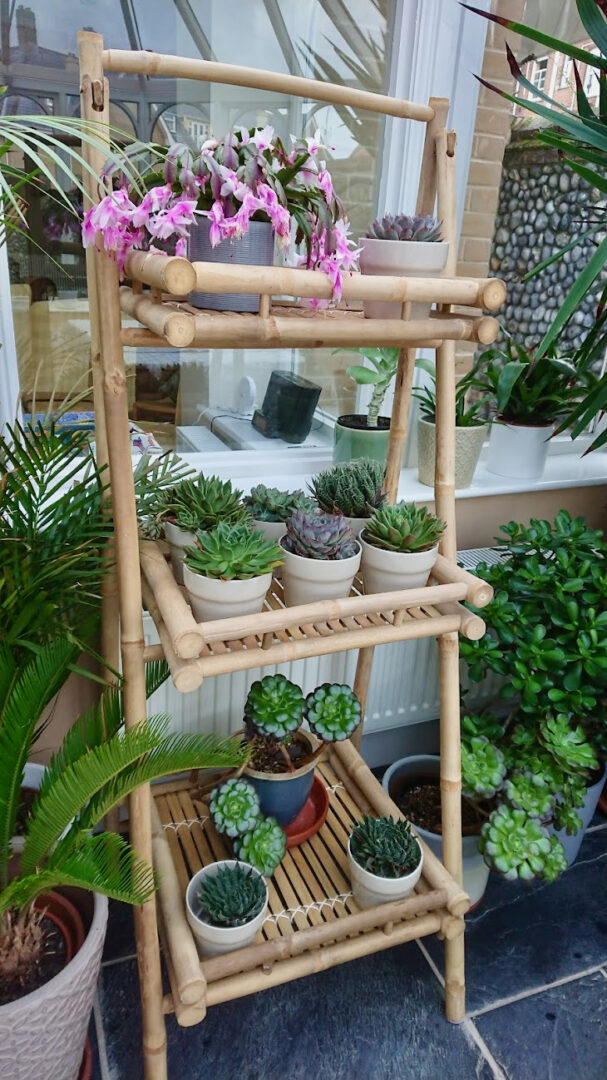
The light in the conservatory is good throughout the day, especially in autumn and winter so it’s the perfect space for growing plants, especially succulents and larger plants that would usually be found in warmer climates and wouldn’t be happy outdoors in our chilly winters.
Yuccas are a great choice for conservatory plants
The first plants we bought for our new conservatory were two modest sized yuccas from IKEA. The IKEA marketplace can be a surprisingly good place to buy large, reasonably priced plants in good health.
Three years on and our pair of yuccas are huge! We’ve re-potted them once and top dress the soil every year. We also feed them a small amount with every weekly watering throughout the growing season. Originally they framed the entrance doorway to the Garden Room, until they grew so large we had to move them. Now they form a wall of green to gaze at when sitting on the rattan sofa.
Kentia palms are beautiful house plants but require careful watering
A pair of Kentia palms has replaced the yuccas at the Garden Room doorway. They’re native to Australia and especially prevalent on Norfolk Island, so it seems appropriate to grow them here (Norfolk Island was named by Captain Cook after the Duchess of Norfolk). With their long elegant green fronds the Kentia palms are trickier to nurture than the rapidly growing yuccas.
Kentia palms don’t like direct light, they don’t enjoy breezes and they certainly don’t appreciate being over-watered. A couple of new fronds have opened recently revealing their bright green leaves which darken over time. It’s always exciting to see new growth and definitely better than having to remove the occasional shrivelled, brown frond which can cause panic that the rest of the leaves may follow. Fortunately, they haven’t.
Succulents don’t require much attention and are eye-catching indoors
Other tropical plants we have are a small cycad, which is also known as a fake palm. It has a centre resembling a coconut husk and very hard spiky leaves. It’s super slow growing – no new leaves in three years! Fortunately we also have a rapid growing Money or Jade Plant (Crassula Ovata) we grew from a cutting taken from a much bigger plant. Luckily these are really easy to grow. Here’s a tip: just stick the bits that occasionally drop off into some earth and they will root rapidly. We sometimes give cuttings to guests to take home and grow themselves.
A related succulent that’s also easy to propagate is the Crassula Ovata ‘Ripple Jade’, you’ll see these dotted all around the house because they really do grow like weeds – ask for a cutting if you don’t believe us and try for yourself.
A great tip is to give your houseplants a holiday outside during summer
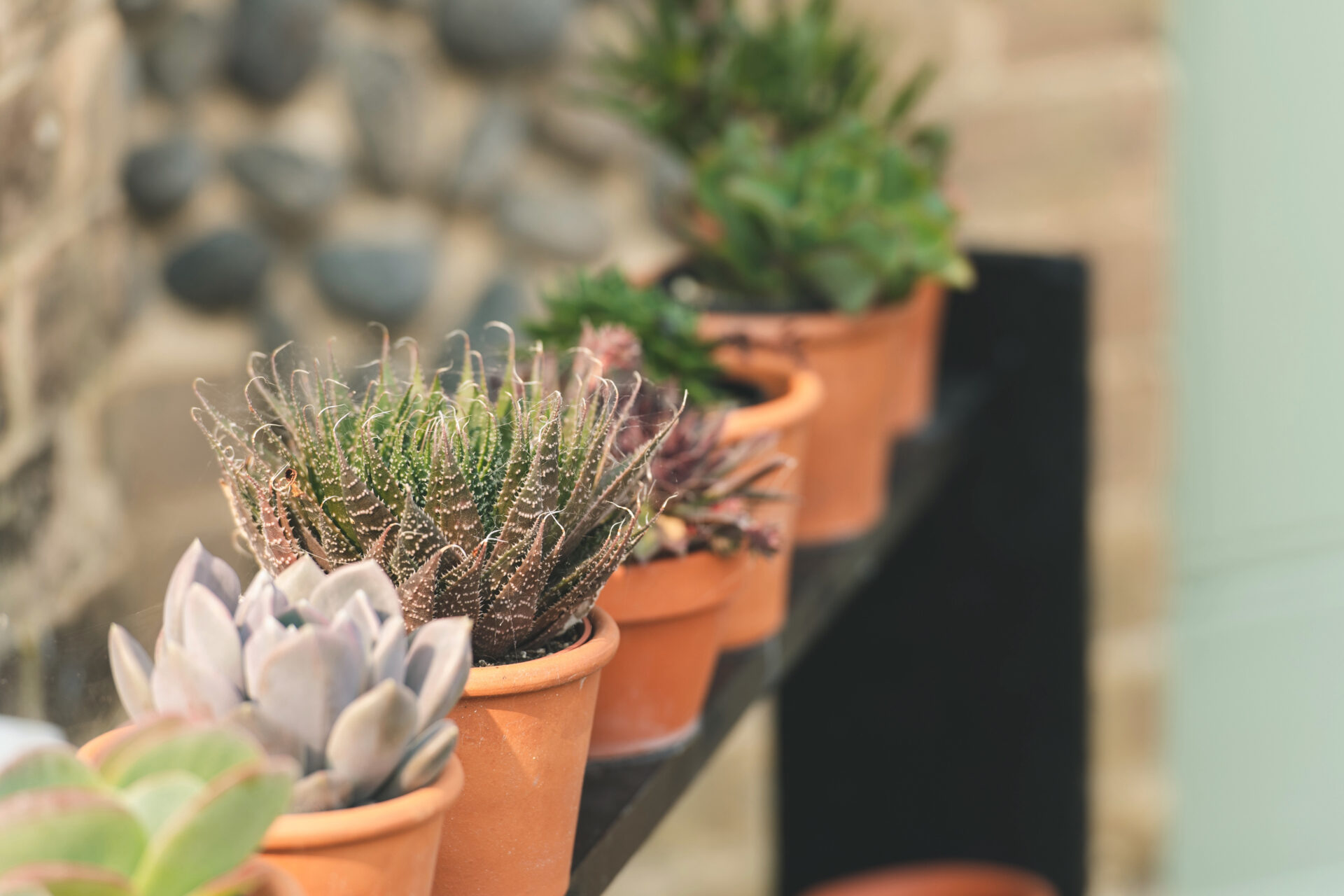
We love succulents so much that in the summer we take them all out to the front of the house and arrange them on staging we constructed from a pallet washed up on the beach. ‘Succulents by the Sea’ we call the display. Succulents and cacti of all varieties thrive in the sunshine of the North Norfolk coastal climate – arid and bright, the boost they get certainly helps nourish them through the winter months when they come back inside – just like us humans. The Aeonium Schwarzkopf especially do really well outside the front door during summertime. This spot enjoys sun for much of the day and these natives of the Canary Islands remind us of our holidays there. Surprisingly the delicate leaves turn blacker in colour the sunnier it gets and the longer summer stretches on, then when they come inside to over-winter the leaves gradually fade back to green.