Victorian Cromer’s Curious Bathing Rules
Men’s Bathing Suits Must Cover “Neck to Knee”
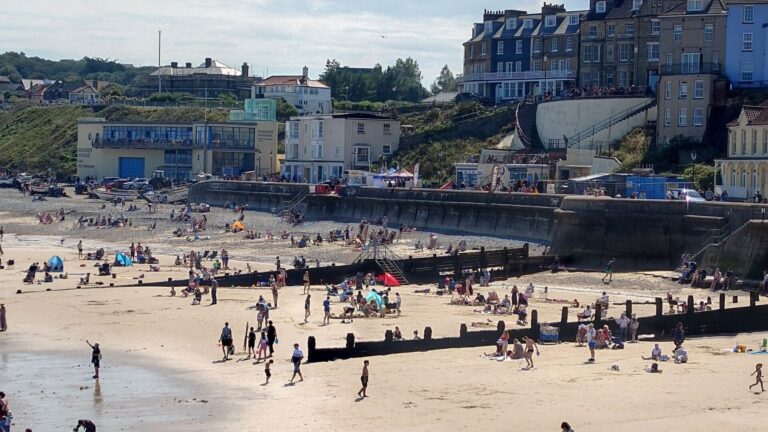
Today, visitors to Cromer beach arrive with surfboards, buckets and spades, windbreaks and wetsuits. A summer dash into the North Sea wearing swimming trunks or a bikini doesn’t raise an eyebrow.
In Victorian Cromer, things were very different.
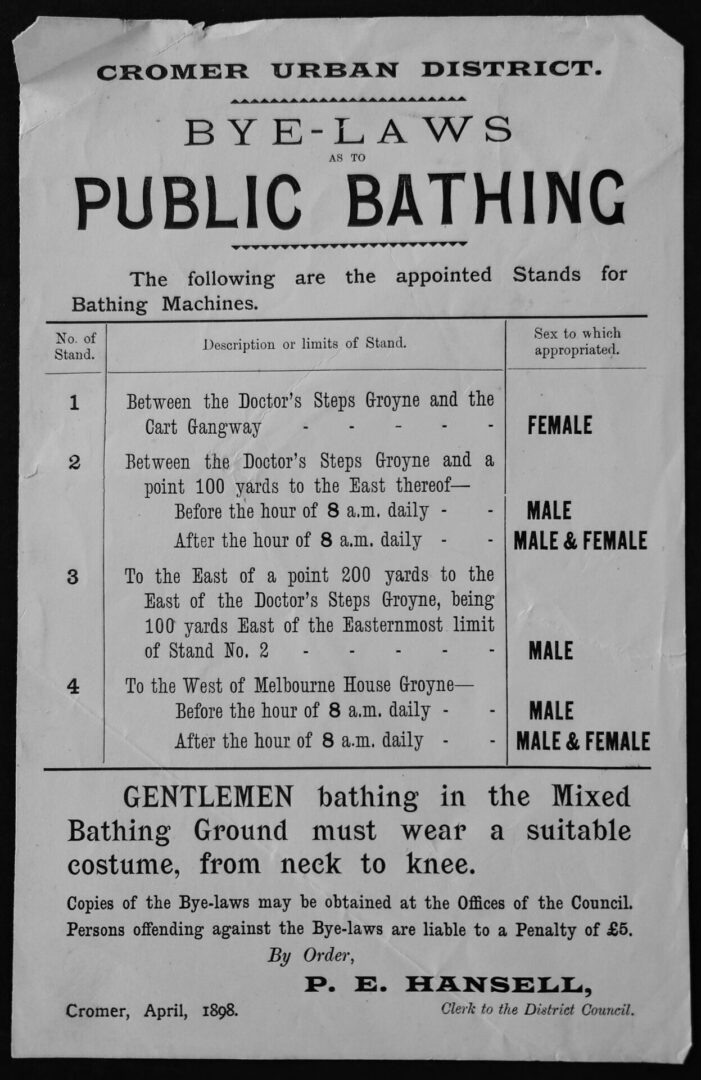
This public notice, posted by Cromer Urban District Council in April 1898, reveals the strict rules by which beach bathing was regulated. Day-excursionists arriving by train and holidaymakers heading for the sea faced a surprising combination of Victorian modesty and societal rules, reinforced by local bye-laws.
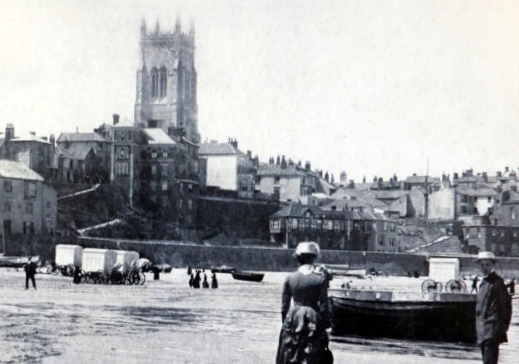
Bathing by the Bye-law Rules
The 1898 bye-laws divided Cromer’s beach into separate bathing areas for men and women.
The section of the beach between the Gangway (the paved slope) and the Doctor’s Steps Groyne at the end of the main promenade towards East Beach, was reserved exclusively for women bathers while further east was the area designated for men. Two designated areas became “mixed bathing grounds” after eight o’clock in the morning, allowing men and women to enjoy the sea together, but only during permitted hours and only if wearing the appropriate attire.
The bye-laws also strictly defined how much flesh the male costume was allowed to show when entering the water while women were present:
“Gentlemen bathing in the Mixed Bathing Ground must wear a suitable costume, from neck to knee.”
The Victorians would have shuddered at the sight of our modern skimpy swimming shorts.
Anyone failing to comply with these strict rules faced a penalty of up to £5 – which was a lot of money back then, and would probably have resulted in a court appearance as there were no on-the-spot fines.
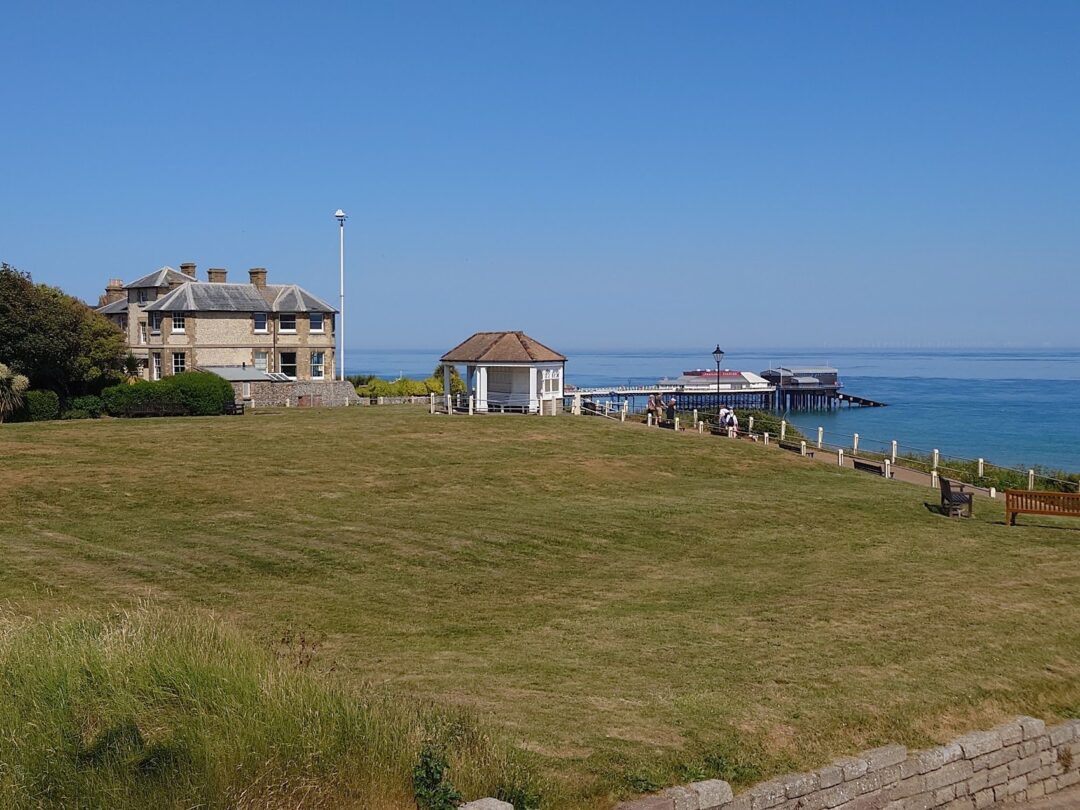
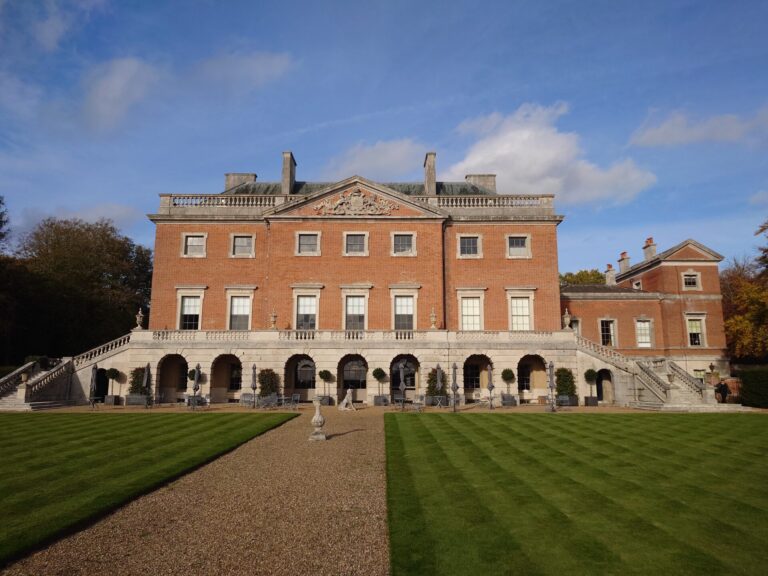
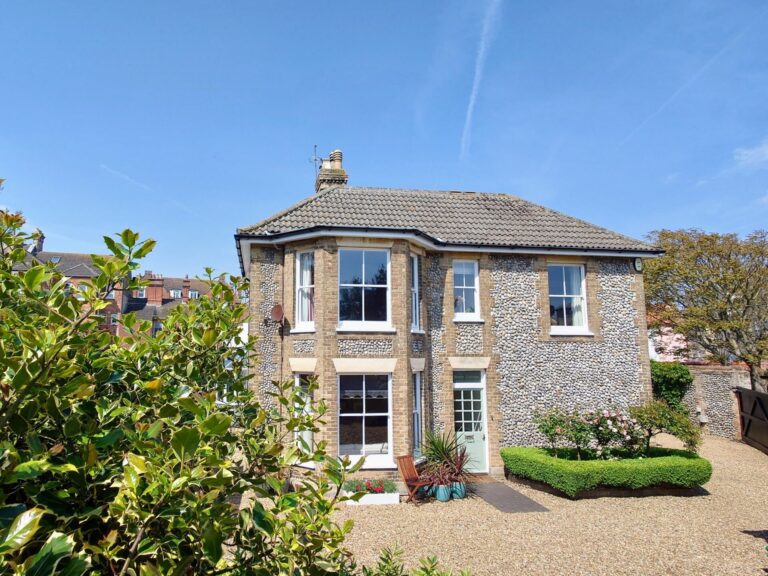
The Hoare family’s former holiday home ;North Lodge is the sister building to North Cottage.
North Lodge Park was formed when their private estate was sold to the Council in 1929.
Previous North Cottage Owners Bathed Here
Cromer’s Victorian bathers entered the water directly below North Lodge and North Cottage, both of which now sit inside North Lodge Park. The park was only created in 1929 long after the end of the Victorian era (1901).
The Hoare family owned both these buildings from 1895 until 1928 and North Cottage until around 1960. They enjoyed annual holidays in Cromer, along with their in-laws the Gurney and Barclay families (founders of the modern bank we know today). Families of the Hoares’ social standing would have strictly obeyed all the bathing rules.
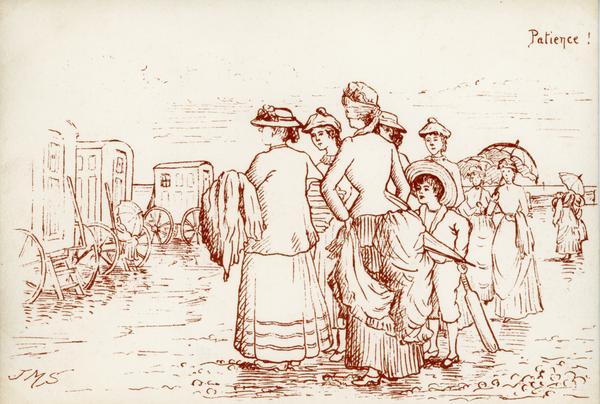
These images are part of the Cromer Museum collection
A Victorian Contraption – the Bathing Machine
A distinctive feature of the Victorian seaside, completely absent today, was the bathing machine. The beach huts they inspired however are still popular today as this article describes.
The bathing machines, wheeled wooden huts, stood on the beach and were taken directly into the sea. These contraptions allowed holidaymakers to enjoy the supposed health benefits of seawater without compromising their modesty.
Bathers changed inside before stepping straight into the water, largely shielded from public view. No twisting around inside a towel trying to step into a swimming costume for the Victorian bathers. For Victorian society, respectability mattered just as much as recreation.
The bathing machines were a familiar sight along Cromer’s shoreline in the 1880s and 90s. They gradually disappeared around the turn of the Century and were gone by the First World War (1914-18).
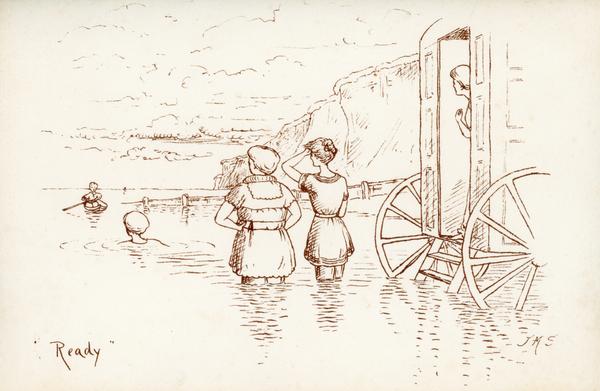
These images are part of the Cromer Museum collection
The Hoare Family and Cromer Beach
One of my delights in researching Cromer’s rich social history is discovering how how much detail has been recorded. We always recommend our guests take a trip to Cromer Museum, to see how Cromer has developed over the centuries.
Among the collections held by the Museum are charming sketches made by J.M. Seebohm. Juliet Seebohm created a sketchbook of life on Cromer beach during the period 1883-1884. She made several sketches of the Hoare, Barclay and Gurney families depicting scenes from their holidays.
In a wonderfully graphic series of illustrations the artist captures moments titled “Patience” and “Anticipation”, as the family wait beside the bathing machines preparing to enter the water. The sketches provide a vivid glimpse of seaside life before pocket cameras transformed holiday memories.
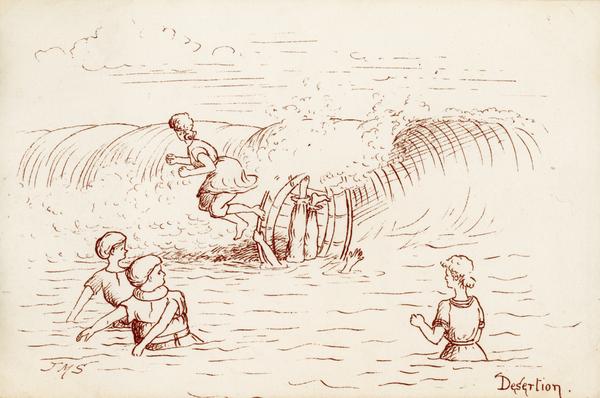
Looking at the drawings today it is easy to imagine the Hoare family standing on the same sands our visitors to North Cottage Cromer enjoy more than a century later. The trio of beach images climaxes with a high-wave drama depicted in the final image “Desertion”.
From Bathing Machines to Paddleboards
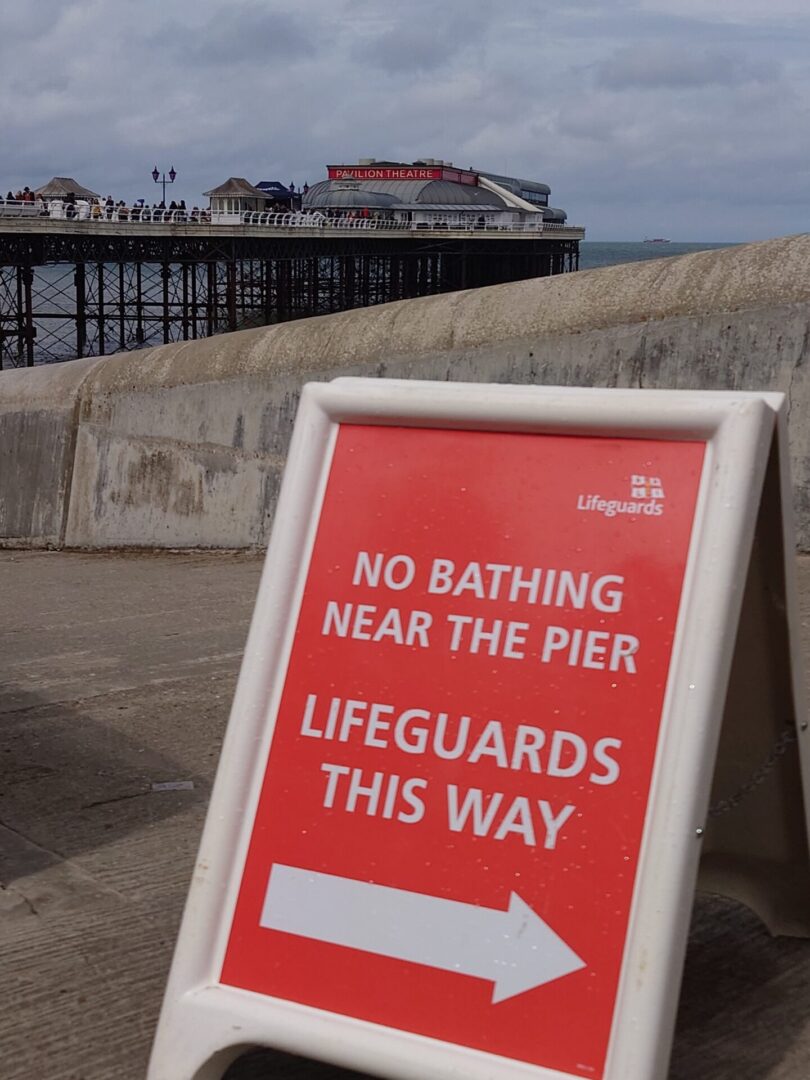
The rules today focus more on safety than segregation, as the lifeguard board pictured beside Cromer Pier shows. The “No Bathing Near the Pier” rule is to intended to discourage dangerous swimming – where unusual currents and rip-tides around the steelwork can be extremely hazardous for swimmers.
Looking out onto Cromer beach today, it’s difficult to imagine the rules, wheeled machines that were required for a pleasurable swim in Victorian times.
One-hundred and thirty years after the bye-laws notice was first displayed the bathing machines are long gone, mixed bathing is taken for granted, and swimwear has moved with the times – although modern skin-tight wetsuits cover up more flesh than even the Victorians permitted.
But the sea is unchanged. We are swimming in the same water, over the same chalk reef as visitors and holidaymakers have paddled and swum for over two-hundred years.
If you stay at North Cottage Cromer you can enjoy the same sea air and easy access to the beach that the Hoare family treasured so much over a century ago.
The Victorians may have entered the water in a more convoluted contraption, but they came to Cromer for the same reasons we all come today. You can discover more about the Hoare family by following the link below.