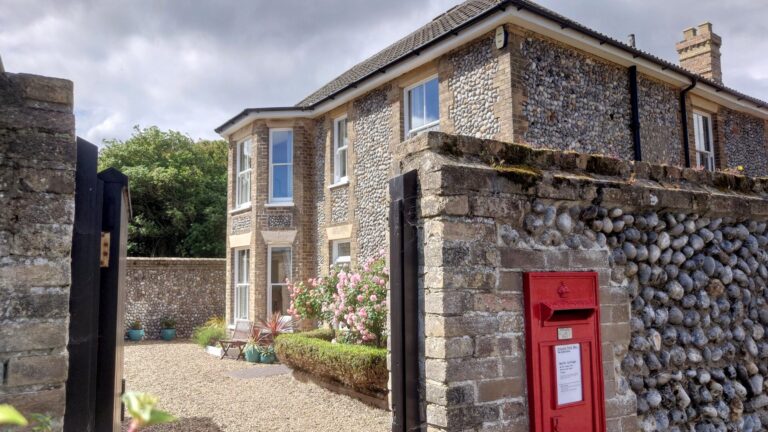
Wartime Memories of Cromer and Louise Hoare at North Cottage

Revealed by a Delightful Phone Call – Louise Hoare’s life in Cromer in the 1940s and 50s
While I was researching Victorian Cromer’s strict bathing rules I was looking at the Cromer museum website. Included in the fascinating photographic archive is the cover of Louise Hoare’s “Cromer Memories”. Louise lived on and off at North Cottage from around 1897 until the late 1950s. Her slim memoir documents her life and a transforming Cromer over 60 dramatic years of history. It was a period of two world wars, and enormous changes as the small fishing village became the large tourist town it is today.
Alongside the book cover was a letter from Ann Grinnell who donated the book to the Norfolk Museum archive in December 2015.
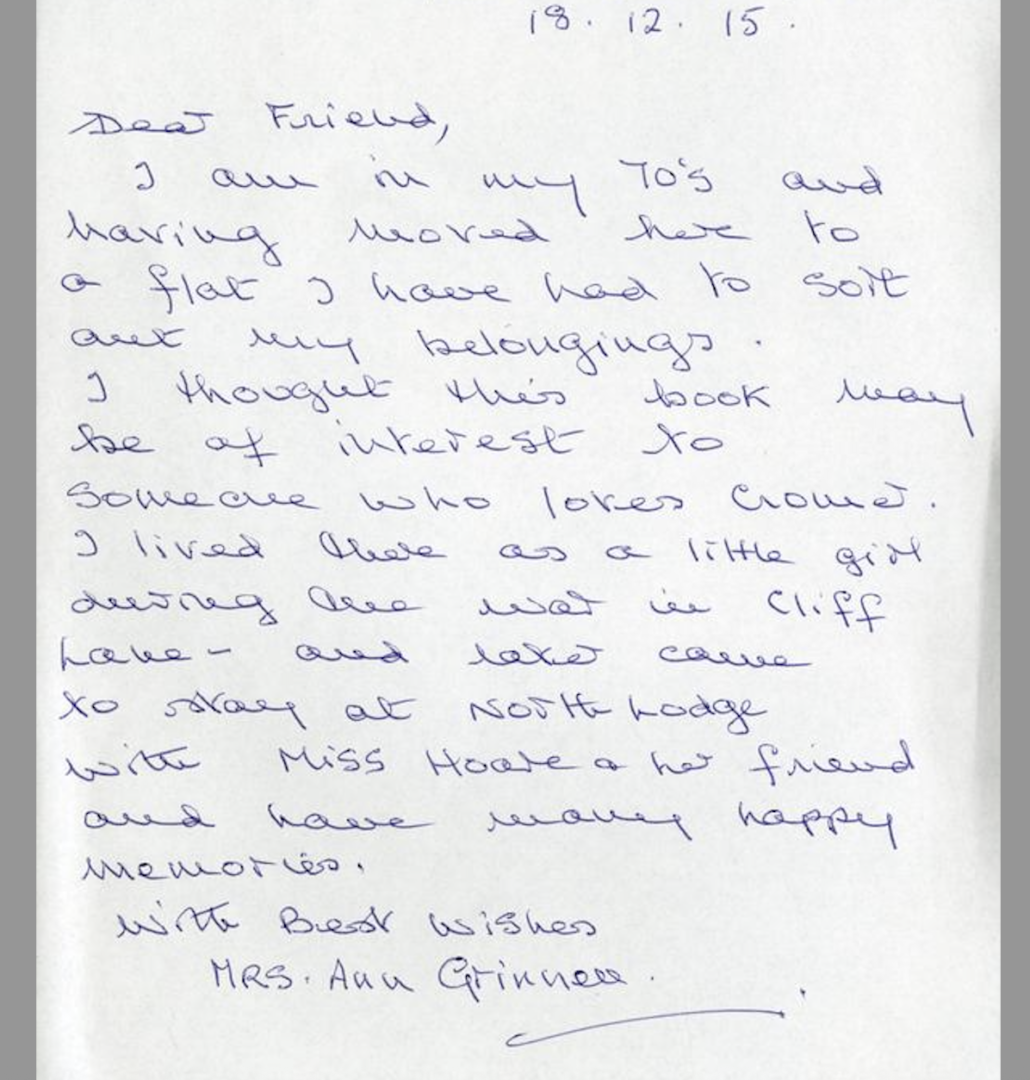
At the top of this letter was Ann’s address. The letter was written eleven years ago. As this was almost certainly one of the few people still living today who knew Louise, I immediately wrote her a letter enclosing the only photo I have of Louise. In my letter I invited Ann to phone me so I could discover more about the years Louise lived at North Cottage. It was a long shot, but I am an optimist.
As I sat outside enjoying Norfolk’s high summer evening sunshine just a week later, I was thrilled when Ann phoned me. For over an hour we talked happily of her memories of Louise Hoare and Cromer during the 1940s and 1950s. Her knowledge of Louise and her great friend Lady Averil Sanderson was even more personal than I dared hope for when I first wrote to Ann.
How Ann came to know Louise Hoare
Ann’s aunt (her mother’s sister) was Miss Elsie Bagg, who is referred to in Louise’s memoir as nurse to Lady Averil Sanderson, or Avie as she was known. In the final chapter of Louise’s Six Generations memoir she recalls how Avie came to live with her at North Cottage when the Second World War broke out. Later, Miss Elsie Bagg was hired as a live-in nurse to help Avie with her severe asthma.
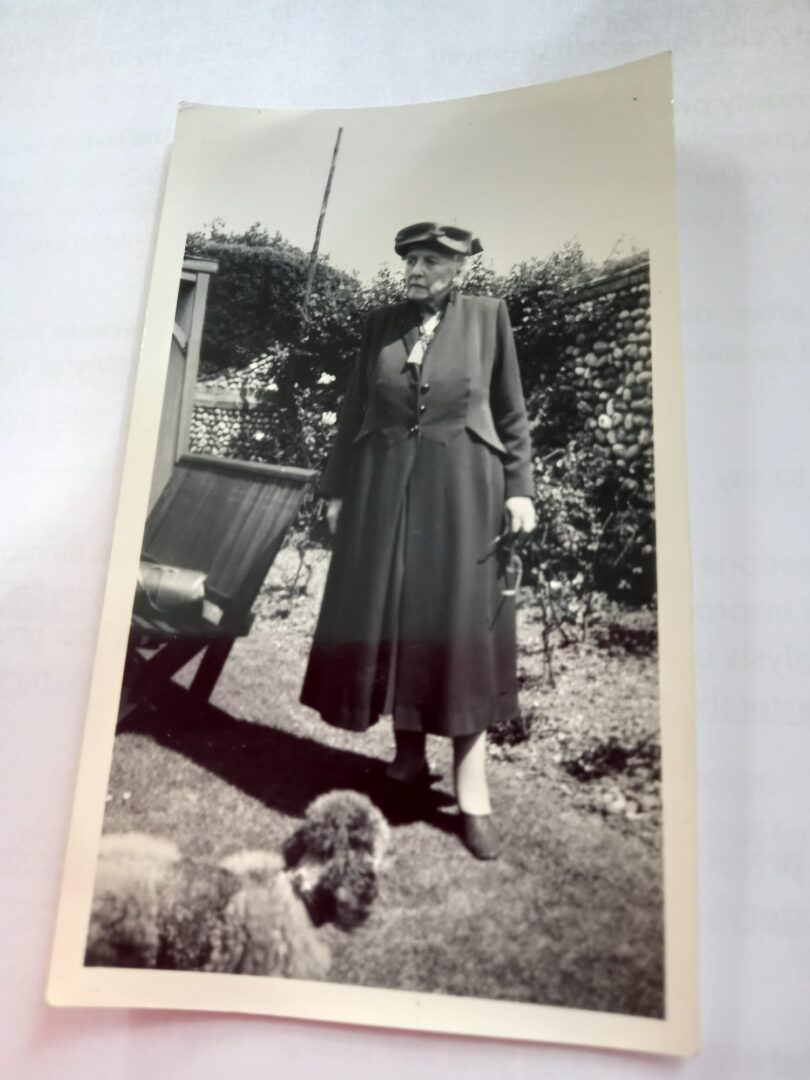
Ann travelled to Cromer with her mother in 1941 from Somerset and remained in the town until just after the war ended in 1947. Through her aunt Elsie, Ann came to know Louise and Avie very well over a number of years visiting Cromer. She was treated as family and Auntie Avie, as she called her, used to send her birthday cards and five pounds each year – a very generous and loving gift.

Cromer During the Second World War
During the Second World War a lot of children were evacuated to Norfolk to escape the threat of bombs dropping on the cities. Louise’s book records how her friend Avie noticed how few warm clothes these children owned and organised collections for them. Avie had no children of her own, although she was married for thirty-seven years before her husband died, and went to live with Louise. About two years later the Ministry of Health created a nationwide clothing scheme – proving it was a great initiative.
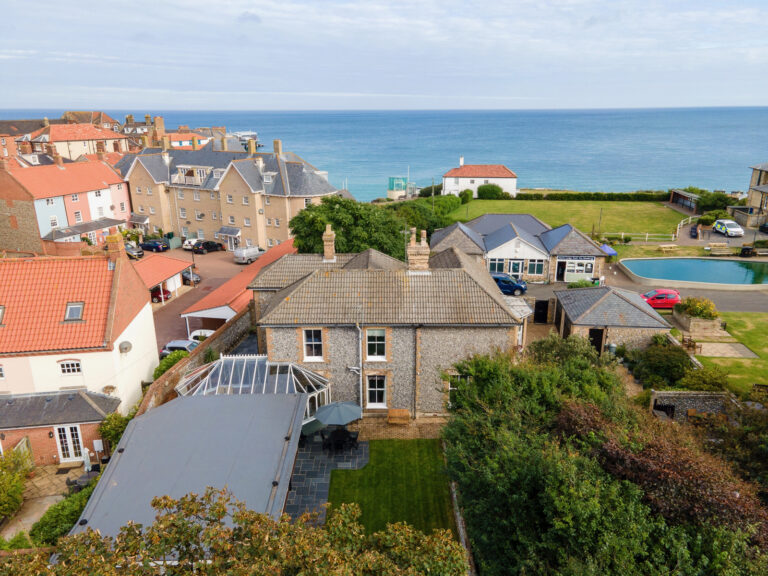
In the final chapter of Six Generations, Louise describes how as bombs fell on Cromer the evacuees were sent away. It was fortunate timing because in July 1942 bombs fell on the town destroying parts of Church Street. Mr Vaughan’s house, very close to North Cottage, was completely destroyed. If that bomb had fallen a few yards further, North Cottage would have been completely demolished and I wouldn’t be writing its history now.
Ann told me she was born in 1939, she recalls going to Cromer beach with a friend during the war, taking with her a bottle of lemonade. She remembers hiding under the stairs at their lodging in Cliff Lane when there was a wartime blackout. Ann also remembers eating her first banana after the war ended – which is a common memory for wartime children because the imported fruit was impossible to buy during the war.
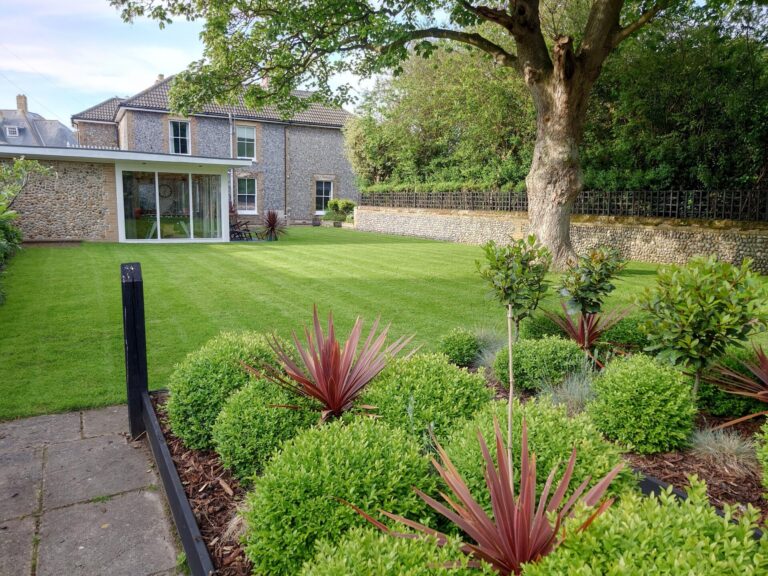
Ann didn’t visit North Cottage until 1949 when she was 10. She remembers Louise and Avie held lots of tea parties at North Cottage, serving tea from a trolley in the sitting room. There were no servants, they didn’t live a grand life, although sometimes someone would come in to cook. The house was homely, and comfortable. There was a summer house in the garden beside the gate.
Louise and Avie were also, as Ann described “Good Church People”. Louise was an Anglican, Avie a Catholic and they had many friends from church.
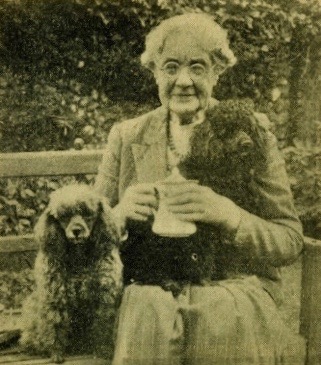
Ann told me Louise and Avie were devoted to their two French poodles. Using WhatsApp she sent me the photos on this page showing Avie, and also her aunt, Elsie Bagg. Ann also remembered the names of the poodles in the only photo I have of Louise – Andre is sitting on Louise’s lap and Perita is sitting next to her on the bench.
The Torquay Connection Finally Solved
Ann also visited Louise and Avie in Torquay, where they spent every winter. I discovered during our chat that they owned a flat there, and went every year because the cold Cromer coastal air was unsuited to Avie’s severe asthma. It was in Torquay that Louise died probably in 1959 or 1960. North Cottage was sold at this time.
Avie continued to live in Torquay until her death in November 1962. Ann came to inherit her dining table and six chairs, and had them for her entire married life until she down-sized her home in 2015. She was sad to let the heirloom go, but she kept the fond memories in her new smaller home in Gloucestershire.
Ann’s Vivid Cromer Memories
Ann remembers Auntie Avie with tremendous affection. She has visited Cromer many times since the 1950s. In 2022 she holidayed in Sheringham and took the Coasthopper bus to Cromer. She walked up to North Cottage and could see the many changes that had happened to the house since she was a young girl visiting Avie Sanderson and Louise Hoare.
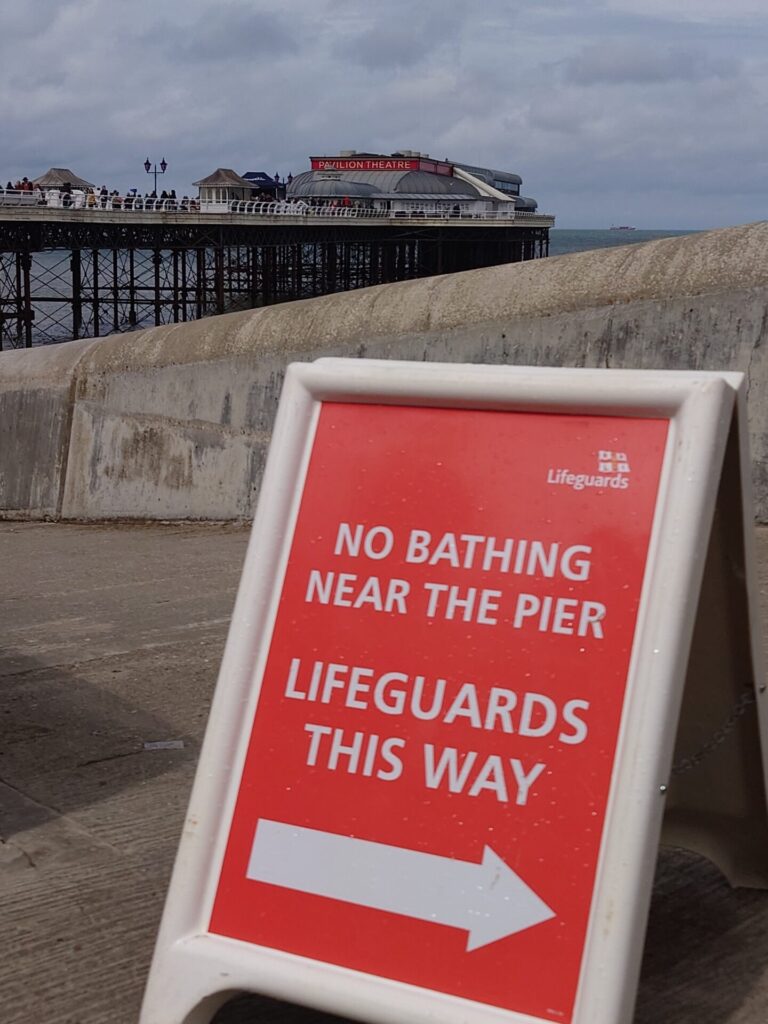
For Ann the visit brought back happy memories of meeting legendary lifeboat coxswain Henry Blogg. Of shopping in Cromer’s Rusts department store and how the cash paid for goods was inserted in a metal tube, whooshed up to the cashier in the office above and the change was returned along the same pipework. She’ll never forget buying crabs from Davies fish shop and wrapping them in oiled silk to take home on the train to Somerset in her suitcase. She remembered seeing shows on Cromer Pier with her mother Lena Luscombe who died in 2000.
Ann lives in Gloucestershire today. She is eighty-seven years old. She remembers Cromer like it was yesterday, and has many cherished memories.
Ann also had a question for me. “Do you have Louise’s other book?”
I was able to send her a link to Six Generations on the Cromer Dictionary website, where she could read the entire text immediately. The last chapter of Louise’s memoir describes in great detail Avie, Miss Bagg and life at North Cottage during the 1940s, and 1950s.
Ann treasured Louise’s Cromer Memories book during all the years from 1956 until 2015 – almost sixty years. When she down-sized her home she knew the book wouldn’t mean as much to her daughter Caroline as it did to her. On a visit to Sheringham Museum, one of the Norfolk Museums Service network, she enquired if they would like it, and when she returned home she packaged it up and sent it off. Ann was about to become a fresh chapter in Louise Hoare’s story.
This is a wonderful and precious development in the story of North Cottage. Ann’s stories and photos have brought a wonderful personal insight to the story of the house and its occupants over 150 years. I’m so grateful to Ann for responding to my letter and capturing another decade of North Cottage history.
You can read the full history of North Cottage here and if you’d like to become a part of its story you can book a stay here too!